Table of contents
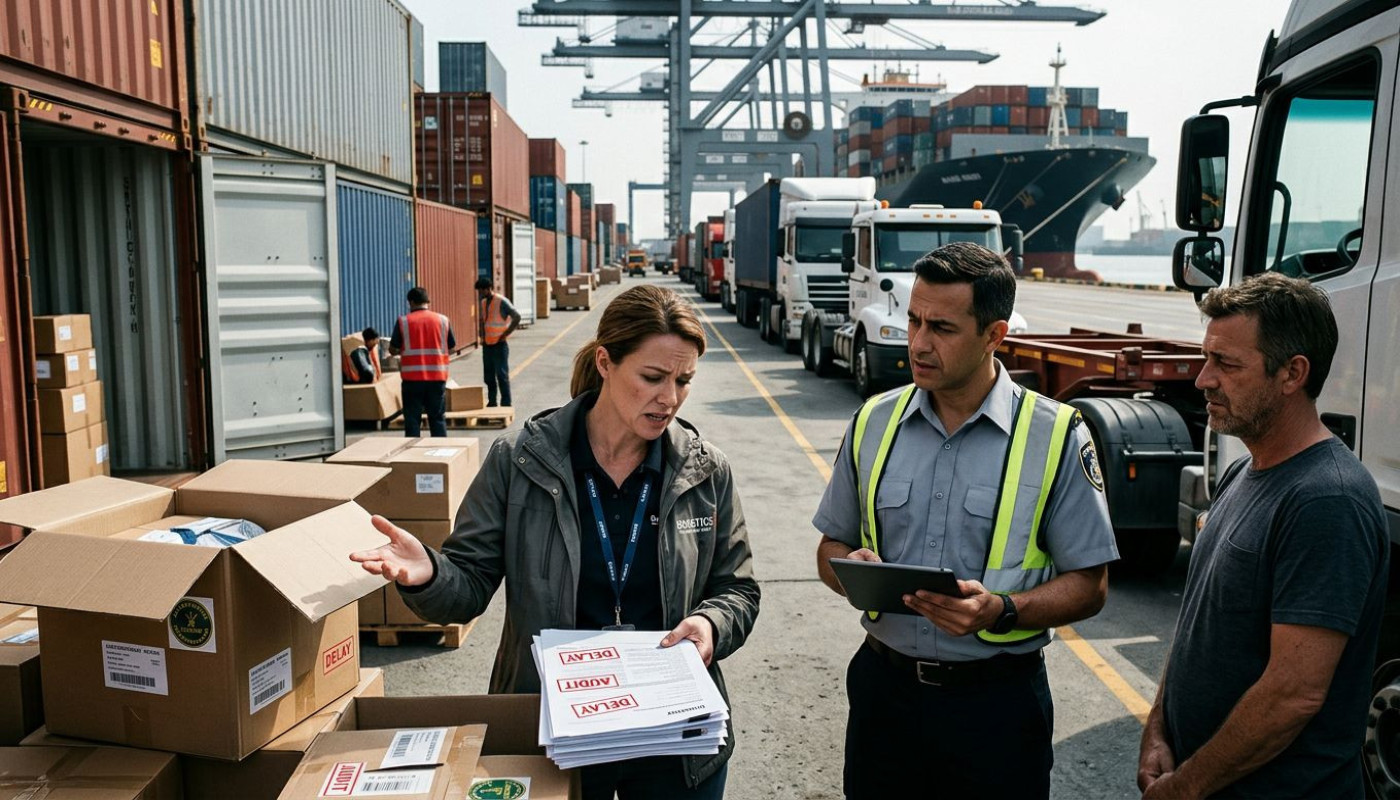
Containers stack up, trucks idle and perishable goods lose value, and the immediate culprit often looks banal: “customs delays”. Yet behind those queueing pallets sits a deeper problem that global trade is struggling to admit, namely compliance chains that are fragmented, opaque and increasingly brittle under new security rules, sanctions regimes and digital filing requirements. As enforcement tightens on both sides of the Atlantic and data quality becomes a border control tool in its own right, delays are turning into a diagnostic signal, exposing where documentation, accountability and systems simply do not line up.
At the border, paperwork now moves goods
How can a missing field stop a factory? Because for customs authorities, data is the cargo. Over the past decade, border agencies have shifted from spot checks of physical shipments to risk-based targeting powered by electronic declarations, advance cargo information and automated profiling, and when the data is incomplete, inconsistent, or filed under the wrong identity, the shipment is effectively invisible to the system, or worse, flagged as risky. The result is familiar to logistics managers: a “routine” import that suddenly requires manual intervention, additional documents, or a re-lodged declaration, which means storage fees, demurrage, missed delivery windows and, for time-sensitive supply chains, the loss of the very logic of just-in-time.
Industry surveys have tried to put hard numbers on what firms feel anecdotally. The International Chamber of Commerce has long warned that non-tariff barriers, including administrative and compliance frictions, can weigh more heavily than tariffs themselves for many sectors. The World Trade Organization, through its Trade Facilitation Agreement, has highlighted that streamlining border processes can cut trade costs meaningfully, and even where tariffs are low, procedural delays still behave like a hidden tax. In Europe, the direction of travel is clear: the Union Customs Code has pushed member states toward harmonised electronic processes, and the next wave, including the EU’s planned data-driven customs reforms and expanded pre-arrival scrutiny, will make consistency and traceability more important than ever.
The same is true in the United States, where Customs and Border Protection leans heavily on advance filing and trusted trader frameworks, and where enforcement focus can shift quickly with political priorities. Add to that the reality of post-pandemic congestion, the rerouting of cargo amid geopolitical tensions, and the growth of e-commerce flows that multiply low-value consignments, and customs is no longer a back-office function; it has become an operational bottleneck. A single error in classification, valuation, origin claim, licensing, or importer identification can turn a smooth lane into a slow lane, and those minutes and days compound across global networks.
The weakest link is often the importer identity
Who, exactly, is responsible when a declaration goes wrong? Customs law tends to answer bluntly: the importer of record. Yet in modern supply chains, the importer can be a distributor, a marketplace intermediary, a freight forwarder acting under instruction, or a newly formed entity created for a project, and that organisational complexity introduces a practical vulnerability. If the importing entity is not properly registered, if it lacks the identifiers required by the destination market, or if its details are inconsistent across brokers and filings, the shipment can be stopped before it is even assessed on the merits of the goods.
In the European Union, this issue often crystallises around the Economic Operators Registration and Identification number, better known as EORI, which is required for businesses engaging with EU customs authorities. After Brexit, for example, many UK firms trading with the EU discovered that their previous assumptions about “doing paperwork through a forwarder” no longer covered the new reality, and that importer identity had become a gating factor. The learning curve was expensive, with small and mid-sized exporters hit hardest by unfamiliar processes, changing Incoterms responsibilities and the sheer volume of new declarations. Similar dynamics appear whenever a company expands into a new market, adds a new product line, or shifts manufacturing, because the customs footprint changes and the identity layer must be updated accordingly.
The compliance chain becomes fragile when responsibility is diffused. Procurement may negotiate terms that shift importer obligations, sales teams may promise delivery timelines that assume frictionless clearance, finance may focus on duty optimisation without tracking documentation readiness, and brokers may be forced to reconcile conflicting instructions under time pressure. That is how a delay becomes a clue: it reveals where internal governance is missing, where master data is unmanaged, and where the organisation has outsourced accountability instead of delegating tasks.
In practice, strengthening the identity layer often means tightening processes around registration, authorisations, and data stewardship, and ensuring that customs brokers, carriers and internal teams are aligned on exactly which entity is declaring, paying and taking legal responsibility. For companies looking to reduce the risk of preventable holds, it can be useful to start with the basics, including verifying the required identifiers and keeping them accessible to the teams who file. Some firms use specialist services to manage this step, and resources such as web can help clarify what documentation is needed and how registrations fit into the broader compliance picture.
Small errors trigger big, expensive checks
What looks like a typo can behave like a red flag. Customs declarations sit at the intersection of commercial data and legal commitments, and authorities can and do test those commitments through documentary checks, physical inspections and post-clearance audits. A misdeclared commodity code can change duty rates and regulatory requirements, an incorrect customs value can raise questions of underpayment, and a weak origin claim can collide with preferential tariff rules. Under modern enforcement, especially where sanctions and dual-use controls are in play, errors can also create security concerns, not just revenue questions.
The cost mechanics are brutal because they cascade. When a container is held, terminals charge storage, shipping lines charge demurrage, hauliers rebook slots, warehouses reschedule labour, and customers either wait or cancel. The indirect costs can be larger than the direct ones: production lines stop for lack of components, retailers miss promotional windows, and brand trust erodes. For perishable goods, pharmaceuticals and temperature-controlled products, delays can also become a quality and liability issue, raising insurance disputes and forcing disposal.
There is a reason many customs professionals talk about “master data” with the seriousness of a safety engineer. The quality of product descriptions, the consistency of classification decisions, the discipline around invoice details and packing lists, and the alignment of Incoterms with actual logistics practices all determine whether a shipment clears smoothly. In global groups, the problem often sits in the gaps between systems, with ERP data not matching broker templates, and local teams improvising workarounds that produce inconsistent declarations across borders.
Regulation is pushing this further. The EU’s Carbon Border Adjustment Mechanism, for example, is building a new reporting layer around embedded emissions for certain goods, and while it is not “customs” in the narrow sense, it operates at the border and increases the compliance surface. Meanwhile, heightened scrutiny of forced labour risks in supply chains, including measures in the US and elsewhere, is changing what importers must be able to prove. The lesson is that delays are not only about queue lengths or staffing, they are often a sign that a firm cannot evidence its claims quickly enough when asked.
Fixing delays means redesigning compliance chains
Can technology alone solve this? Not without governance. Digital tools can reduce manual errors, pre-validate fields, and create audit trails, but the underlying chain still depends on clear responsibilities, disciplined data management and informed decision-making. The organisations that shorten clearance times tend to treat customs as a strategic function, integrating it into product onboarding, supplier management and contract design, rather than leaving it to the last mile of shipping.
A practical starting point is mapping where information originates and where it is transformed. Who assigns commodity codes, and on what basis? Who owns origin determinations, and how are supplier declarations stored? How are customs values calculated when discounts, royalties, assists or freight charges apply? Which party is the importer of record under the chosen Incoterms, and do internal teams understand the consequences? When these questions have no clear owner, customs delays become predictable rather than exceptional.
Companies also increasingly invest in proactive engagement with authorities and in structured internal controls. Trusted trader programmes, where available, can offer benefits, but they require demonstrable compliance maturity. Internal audits, regular broker performance reviews and standardized templates for commercial documents may sound mundane, yet they reduce the noise that makes shipments appear risky. Training matters as well: a sales team that understands what cannot be promised, and a procurement team that understands what must be evidenced, can prevent errors long before a container reaches a port.
Finally, resilience now means designing for scrutiny. Geopolitical uncertainty, sanctions changes and shifting enforcement priorities mean that what cleared last quarter may not clear next quarter without questions. Firms that treat delays as a feedback loop, analysing causes, quantifying costs and closing process gaps, can turn border friction into an operational advantage. Those that ignore the signal will keep paying the same hidden tax, one held shipment at a time.
What businesses can do this quarter
Start with a clearance stress-test, book time with your customs broker to review your top lanes and products, and set a realistic budget for data clean-up, registrations and documentation control. If you trade with the EU, verify identifiers early and avoid last-minute filings; for complex moves, consider specialist support. In many jurisdictions, SMEs can also seek guidance through trade facilitation desks and sector associations, and in some cases access training or export support programmes.
Similar articles

Sanctions Compliance: When The Law Meets The Reality Of Immobilized Assets

How Fiscal Disputes Unravel: A Behind-the-scenes Look At Contentious Audits

How Eligibility Rules Silently Favor Certain Professions

How AI Is Reshaping Creativity In Visual Arts?
Future Trends In Data Storage And Management Facilities

How quantum computing is reshaping encryption and cybersecurity

How To Choose The Right Digital Planner For Your Lifestyle Needs
